

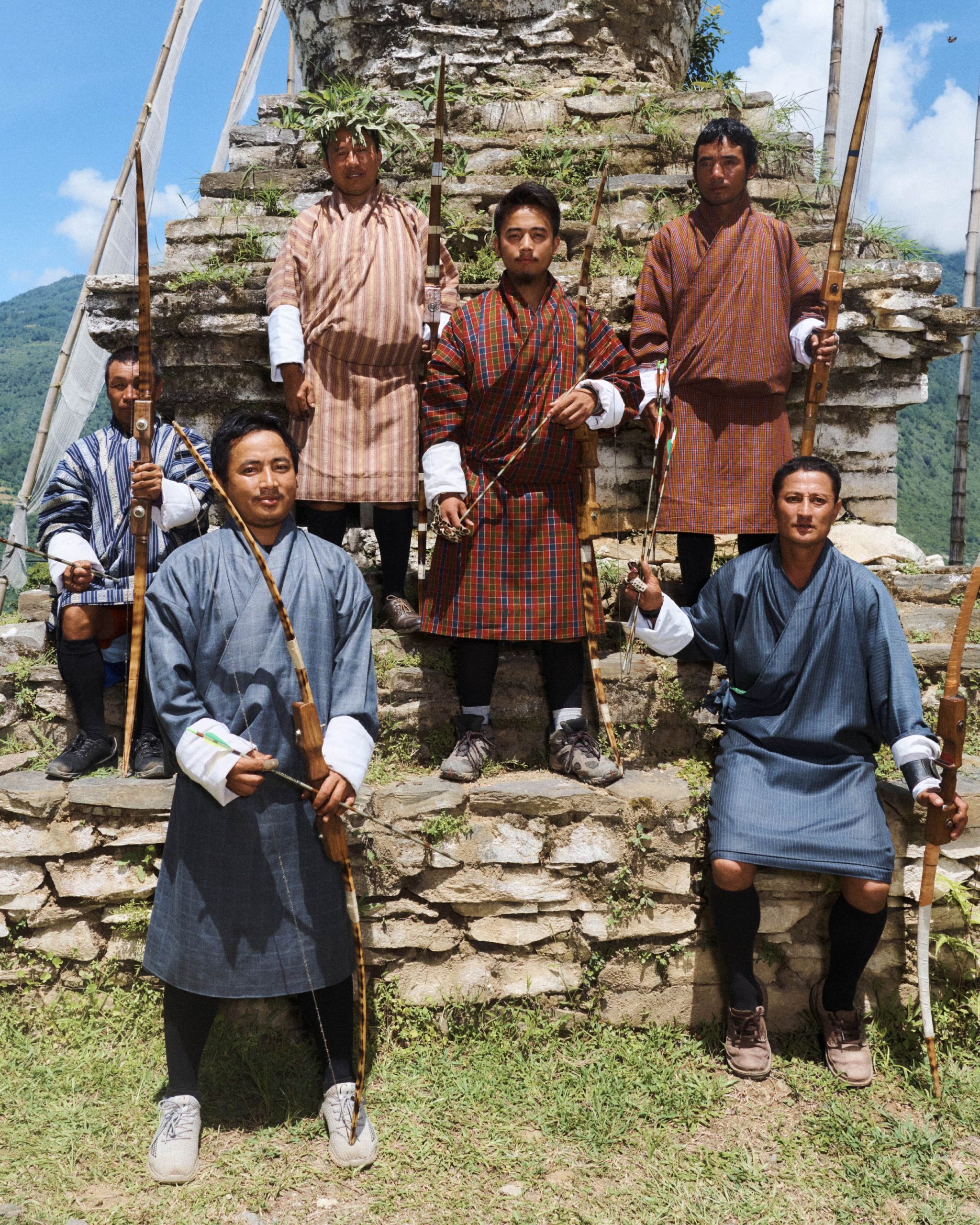
When you think of national sports, football, cricket, or baseball might come to mind. But in the mystical Kingdom of Bhutan, nestled high in the Eastern Himalayas, the national sport is something far more ancient and spiritually profound: archery. Known locally as dha, Bhutanese archery is not merely a competitive pursuit—it’s a vibrant celebration of culture, spirituality, community, and the enduring spirit of a nation that has preserved its traditions through centuries.
A Legacy Written in Arrows
The story of archery in Bhutan stretches back through the mists of time, intertwining with the kingdom’s most legendary tales. In Buddhist mythology and Bhutanese folklore, the bow and arrow aren’t just weapons—they’re divine instruments wielded by gods and heroes.
One of the most remarkable legends dates to the 19th century Duar War between Bhutan and British forces. According to tradition, Jigme Namgyal, father of Bhutan’s first king, offered prayers to Yeshey Gonpo, the guardian deity of Bhutan, before loosing an arrow from a mountain peak. That arrow is said to have soared through the air and struck the British general squarely in the forehead, turning the tide of battle. Whether literal truth or symbolic narrative, such stories illustrate how deeply archery is woven into the fabric of Bhutanese identity.
The spiritual significance goes even deeper. In the 10th century, a Buddhist monk named Lhalung Pelgyi Dorje performed the Black Hat Dance before the Tibetan King Langdarma, who had persecuted Buddhism. Hidden in the voluminous sleeves of his ceremonial dance costume was a bow and arrow. The monk feigned a bow of respect, then drew his hidden weapon and killed the king, an act remembered not as murder but as righteous defense of the dharma. This legendary event forever linked the bow and arrow with spiritual protection and divine justice.
In the 15th century, prophecies by the beloved saint Lama Drukpa Kunley were believed to originate from his bow and arrows. Even today, no religious ceremony, festival, or significant holiday in Bhutan is complete without the symbolic presence of bows and arrows. Images of Buddhist deities holding these implements are considered especially auspicious.
From Battlefield to Playing Field
Historically, bows and arrows served practical purposes in Bhutan—hunting for sustenance and defending the kingdom from invaders. The Drukpa archers, armed with their bamboo longbows, successfully repelled Tibetan invasions on multiple occasions, their skill in archery becoming synonymous with Bhutanese resilience and independence.
It wasn’t until the reign of the 12th Desi Ngawang Gyaltshen in the 18th century that archery began its transformation from purely martial art to organized sport. According to oral accounts, Desi Ngawang Gyaltshen adapted the traditional arrow design, changing the v-shaped metal head that caused arrows to stick in targets to a rounded tip that could be easily removed—a modification that made the sport more practical for repeated play.
When Bhutan joined the United Nations in 1971, archery was officially declared the national sport, cementing its place at the heart of Bhutanese culture. Since then, its popularity has only grown, with the Bhutanese government actively promoting the sport both domestically and internationally. Bhutan even maintains an Olympic archery team, though the differences between Olympic and traditional Bhutanese archery are substantial enough that Bhutanese archers face significant challenges competing on the world stage.
The Bhutanese Way: How the Game Is Played
If you’ve watched Olympic archery, prepare to be surprised—Bhutanese archery is an entirely different beast, and that’s precisely what makes it so fascinating.
The Range and Target
Traditional Bhutanese archery ranges stretch an impressive 145 meters (about 476 feet)—nearly double the 70-meter distance used in Olympic competitions. This extended range demands exceptional skill, concentration, and physical conditioning. At each end of this lengthy field stands a small wooden target, brightly painted and measuring approximately three feet tall and eleven inches wide. Given the distance, hitting these relatively modest targets requires remarkable precision.
The targets, called bacho, are traditionally crafted from wood and decorated with vivid colors. The bullseye, known as karay, sits at the center, and hitting it is cause for great celebration.
Teams and Equipment
Archery teams in Bhutan number thirteen players each, with two reserves bringing the total to fifteen. This team-based structure fosters camaraderie and collective identity, as villages, regions, government ministries, and districts often field their own teams.
Traditionally, Bhutanese bows were crafted from a special variety of thick bamboo called pagshing. There are two main types: the changzhu (stretched bow) and tapzhu (folded bow). These bows feature twisted stinging nettle strings, while arrows are fashioned from bamboo or reeds, fletched with bird feathers and tipped with lead or metal arrowheads. Quivers might be wooden, covered with animal hide, and fitted with woven straps.
However, modern Bhutanese archery has embraced technology. Today, most serious archers use compound bows made of fiberglass and equipped with pulleys—lethal precision instruments originally designed for hunting large game like bears and moose. Interestingly, these advanced weapons are used in Buddhist Bhutan purely for sport and celebration, never for taking life. A quality compound bow costs between 50,000 to 100,000 Ngultrum (approximately $600-$1,200 USD), representing a significant investment for many families.
The Scoring System and Match Flow
The scoring in Bhutanese archery is delightfully complex, contributing to the sport’s unhurried pace and social atmosphere. Teams take turns shooting two arrows at a time, first in one direction down the range, then back in the opposite direction.
Points are awarded as follows:
- One point: The arrow lands within an arrow’s length of the target
- Two points: The arrow hits the target
- Three points: A bullseye (karay)
The first team to reach 25 points wins—but here’s where it gets interesting. The scoring system includes a strategic twist: a subsequent hit by the opposing team can invalidate the previous team’s score. This “back-and-forth” element adds layers of tension and strategy, keeping everyone engaged.
Matches are typically played in sets of three or five. Due to the intricate scoring rules combined with the extensive socializing, feasting, and festivities that accompany every match, traditional archery competitions unfold at an excruciatingly slow pace by modern sports standards. Contemporary matches often span several days, while historical accounts describe competitions lasting up to a month!
Rituals, Magic, and Mindfulness
What truly sets Bhutanese archery apart from sports in other cultures is the elaborate web of rituals and beliefs that surround it. An archery match in Bhutan is as much a spiritual event as an athletic competition.
Pre-Competition Preparations
The night before a major match, archers engage in practices that might seem unusual to outsiders. Competitors are advised not to spend the night with their wives in order to achieve maximum concentration. Instead, the team spends the night together in the woods or in a barn, bonding and performing rituals.
On the morning of competition, teams may conduct additional ceremonies that can include offerings, prayers, chanting, and consultations with astrologers. In traditional village competitions, known as chogda (archery of sides), astrologers are consulted to determine the most auspicious venue, timing, and even the direction from which the teams should approach the archery ground.
Some teams go to remarkable lengths to gain an advantage. It’s not uncommon for teams to hire astrologers for substantial fees to determine which archers should be fielded for optimal performance. Bows and arrows might be blessed by monks or priests. In more competitive village matches, black magic and curses directed at opposing archers are not beyond consideration—though such practices exist in the shadowy margins of the sport.
Sacred Spaces and Symbolic Acts
Local monks or village elders often lead rituals at the archery range itself. These ceremonies include chanting, burning incense, and placing symbolic items near the field. The entire range becomes a sacred space where the physical and spiritual realms intersect.
When the final point is scored and victory secured, the winning team performs the choe ritual, circling the target while throwing dust in the air and crying “Choe!”—literally meaning “I make an offering.” This gesture transforms competitive triumph into spiritual offering, acknowledging that success comes not merely from skill but from divine blessing.
Mindfulness and Meditation
For many archers, the act of shooting becomes a meditative practice. Drawing the bow, focusing on the distant target, controlling breath and heartbeat, then releasing the arrow requires a state of mindful presence remarkably similar to meditation. In this way, archery serves as a moving meditation, a physical expression of the Buddhist principles that permeate Bhutanese life.
Archers engage in prayers and infuse their actions with spiritual intent. The sport thus becomes not just physical exercise but a form of spiritual cultivation, aligning perfectly with Bhutan’s unique approach to measuring national success through Gross National Happiness rather than purely economic metrics.
The Festival Atmosphere: Dance, Song, and Friendly Taunts
Attend a Bhutanese archery match and you’ll quickly realize this is no quiet, contemplative sporting event. The atmosphere is electric, festive, and deeply social—more like a village fair than a modern athletic competition.
The Dancers and “Jeerleaders”
Each team typically brings its own group of dancers, who serve as enthusiastic cheerleaders. When an archer from their team hits the target, these dancers burst into elaborate traditional dances at both ends of the range, often hopping and spinning within the target enclosure itself. The celebrations are joyous and uninhibited.
But the dancers don’t just celebrate their own team—they actively attempt to distract and unnerve opposing archers through jeering, teasing, and playful mockery. This tradition of good-natured harassment adds a layer of psychological challenge to the sport. Archers must maintain focus despite colorful insults and distractions hurled by the opposing team’s supporters.
The Verbal Battle: Kha Shed
Perhaps the most intellectually stimulating aspect of Bhutanese archery is the tradition of kha shed—verbal dueling through poetry and eloquent insults. Competing archers engage in verbal battles, displaying literary and intellectual skills that are considered just as important as physical archery ability.
Before shooting, archers may chant traditional poetic verses and proverbs. They praise their own arrows with flowery language, offer encouragement to teammates in elaborate metaphors, and demean opponents through sophisticated wordplay. The ability to compose and deliver impressive literary insults on the spot is highly valued.
One famous line from these verbal duels goes: “Where the vulture flies, my stone shall fly, there to collide.” Such exchanges require quick wit, knowledge of traditional poetry, and the ability to compose impressive verse in the moment—a skill that takes years to develop.
As a Bhutanese proverb states: “Archery and discus are to men, as songs and dances are to women.” This reflects archery’s traditional role in male social identity, though this is gradually changing.
Breaking Gender Barriers
Historically, women were not permitted to touch bows, as it was considered bad luck. Archery was exclusively a male domain, tied to traditional masculine roles of hunting and warfare. Women participated as dancers, cooks, and supporters but not as competitors.
However, modern Bhutan has seen pioneering women break through these barriers. Tshering Chhoden represented Bhutan at the 2000 Sydney and 2004 Athens Olympics. Perhaps most remarkably, Dorji Dema competed in the 2008 Beijing Olympics while three months pregnant—enduring morning sickness and difficult conditions while representing her country on the world stage.
Today, Dorji Dema is working to assemble an all-female team to compete in traditional Bhutanese archery tournaments, challenging centuries of male dominance and creating new possibilities for future generations of Bhutanese women.
Food, Drink, and Community
No Bhutanese archery match is complete without feasting. Throughout the day-long (or multi-day) competitions, participants and spectators alike enjoy abundant food and drink. Traditional Bhutanese dishes are served, and ara—the local rice wine or spirit—flows freely.
In fact, alcoholic beverages are commonly consumed from the morning of competitions onward, adding to the festive atmosphere. This stands in stark contrast to the teetotal Olympics, which may partially explain why Bhutanese archers, accustomed to loosening up with ara during matches, sometimes struggle to adapt to the more formal, regulated atmosphere of international competition.
The social aspect of archery cannot be overstated. These gatherings bring entire communities together, dissolving social barriers and strengthening bonds. Whether between villages, government ministries, or regional teams, archery matches foster camaraderie and shared identity. Regardless of age, gender, or social status, the archery field becomes a level playing ground where Bhutanese people stand united in their love for the sport.
Where to Experience Bhutanese Archery
For travelers to Bhutan, witnessing or participating in archery offers one of the most authentic and enriching cultural experiences available.
Regular Venues
Nearly every village and town in Bhutan has its own archery field. In Thimphu, the capital, Changlimithang Stadium serves as one of the kingdom’s most prominent archery venues, hosting regular competitions and tournaments.
On weekends throughout the country, you’ll find locals gathering for friendly matches. Simply showing interest as a visitor often results in warm invitations to watch, learn about the traditions, and even try your hand at shooting.
Major Tournaments and Festivals
Several significant archery competitions occur throughout the year:
The Coronation National Archery Tournament: One of the most prestigious national competitions, bringing together the best archers from across the country.
The Yangphel Tournament: Another major national event that draws large crowds and top talent.
Losar Competitions: During Losar, the Bhutanese and Tibetan New Year, archery tournaments are held across the country as part of the celebrations. These competitions carry extra cultural significance and festive energy.
Festival Archery: During major religious festivals like the Thimphu Tshechu and Paro Tshechu, archery competitions and demonstrations are common, allowing visitors to experience the sport within its fuller cultural context.
Trying It Yourself
Many tour operators in Bhutan, including luxury travel companies, now offer archery experiences as part of their itineraries. These typically include:
- Instruction from experienced local archers
- Use of traditional bamboo bows or modern compound bows
- Explanation of the rules, traditions, and cultural significance
- The opportunity to shoot at actual archery ranges
- Sometimes, participation in informal matches with locals
Don’t be discouraged if your first attempts are embarrassing—many visitors find the powerful compound bows difficult to draw, and arrows tumbling to the ground at one’s feet is a common (and amusing) introduction to the sport. The Bhutanese are remarkably patient and good-humored about teaching foreigners their beloved game.
The Deeper Meaning: Unity, Identity, and Happiness
Bhutanese archery transcends sport to become something more profound—a living expression of national identity and values.
Cultural Continuity
In rural villages across Bhutan, children watch their parents and grandparents participate in archery matches during festivals and gatherings. Young boys (and increasingly, young girls) begin learning to shoot at early ages, often starting with simple bows before progressing to more sophisticated equipment. This intergenerational transmission ensures that archery traditions pass intact from one generation to the next.
The preservation of traditional craftsmanship—the making of bamboo bows, the fletching of arrows, the painting of targets—represents valuable cultural knowledge that might otherwise be lost to modernization. While compound bows have become popular, many archers still value traditionally crafted equipment for its historical significance and the tangible connection it provides to Bhutanese heritage.
Values and Mindfulness
Archery embodies core Bhutanese values: mindfulness, focus, teamwork, camaraderie, and resilience. The sport requires patience and concentration—qualities that align with Buddhist practice and Bhutan’s unique development philosophy centered on Gross National Happiness.
The communal nature of archery matches reinforces social bonds and collective identity. In a rapidly changing world, these gatherings serve as anchors of continuity, spaces where Bhutanese people reconnect with tradition, community, and cultural roots.
A Paradox of Peace
Perhaps the most fascinating aspect of Bhutanese archery is the paradox it represents: a martial art practiced enthusiastically by a population that abhors killing. Bhutan is a devoutly Buddhist nation where hunting is generally banned and where compassion for all living beings is a fundamental value. Yet the national sport involves weapons designed for taking life.
This paradox resolves in the Bhutanese approach to archery as celebration rather than combat, as community-building rather than conflict, as spiritual practice rather than violence. The deadly compound bows and arrows never fulfill their designed purpose in Bhutan—instead, they become instruments of joy, connection, and cultural expression.
Planning Your Archery Experience
If you’re planning a trip to Bhutan and want to experience archery, here are some practical tips:
Best Times to Visit: Major festivals like the Thimphu Tshechu (September/October) and Paro Tshechu (March/April) offer opportunities to see archery alongside other cultural celebrations. Losar (February) features numerous archery competitions. However, informal matches occur year-round, especially on weekends.
What to Wear: If attending as a spectator, wearing traditional Bhutanese dress (gho for men, kira for women) is appreciated but not required for tourists. Comfortable walking shoes are recommended as you may stand for extended periods.
Etiquette: Show respect for the rituals and traditions. Ask permission before photographing. Maintain a safe distance from the range. If offered ara or food, accepting is considered polite. Applaud when archers hit the target, regardless of which team they’re on.
Photography: The colorful costumes, dynamic dances, and dramatic moments of competition make archery matches wonderfully photogenic. The long range allows for interesting perspectives and compositions.
Language: Learning a few words of Dzongkha, Bhutan’s national language, will enhance your experience. “Kadrin chhe” (thank you) and “Kuzuzangpo la” (hello, with respect) are good starting points.
Conclusion: The Arrow That Binds
Bhutanese archery is far more than a sport—it’s a living tapestry woven from threads of history, spirituality, community, artistry, and joy. In the rhythmic release of arrows across mountain valleys, in the exuberant dances celebrating each hit, in the witty verbal exchanges between competitors, and in the sacred rituals that frame each match, we see a culture that has found ways to preserve its essence while adapting to the modern world.
For the Bhutanese people, archery represents continuity with ancestors who defended the kingdom with bamboo bows, connection to Buddhist deities who wield divine arrows, and celebration of the values that make Bhutan unique—mindfulness, community, and the pursuit of collective happiness over mere material success.
For visitors, experiencing Bhutanese archery offers a window into a way of life that prioritizes meaning over efficiency, community over individualism, and joy over competition. In a world that often moves too fast, the unhurried pace of a traditional archery match—stretching across days, punctuated by feasting and dancing, structured by ancient rituals—provides a refreshing alternative vision of what sport and society can be.
The arrow flies across the valley, released by hands guided by centuries of tradition. Will it find its mark? Perhaps. But in Bhutan, the journey matters as much as the destination, and the gathering of community matters as much as the final score. The bow and arrow, once instruments of war, have become instruments of peace—binding communities together, connecting present to past, and carrying forward the unique spirit of the Thunder Dragon Kingdom.
As Bhutan continues its careful dance between tradition and modernity, archery stands as a powerful symbol of what can be preserved, celebrated, and shared with the world—a sport that is simultaneously ancient and alive, competitive and communal, physical and spiritual. In the twang of bowstrings and the whisper of arrows in flight, Bhutan tells its story to all who will listen.
Whether you come to Bhutan as a curious traveler or an archery enthusiast, make time to experience dha. Stand at the edge of an archery range, feel the festival atmosphere, taste the ara, watch the dances, listen to the verbal sparring, and perhaps even draw a bow yourself. In doing so, you’ll touch something essential about Bhutanese culture—and perhaps discover something about yourself as well.