

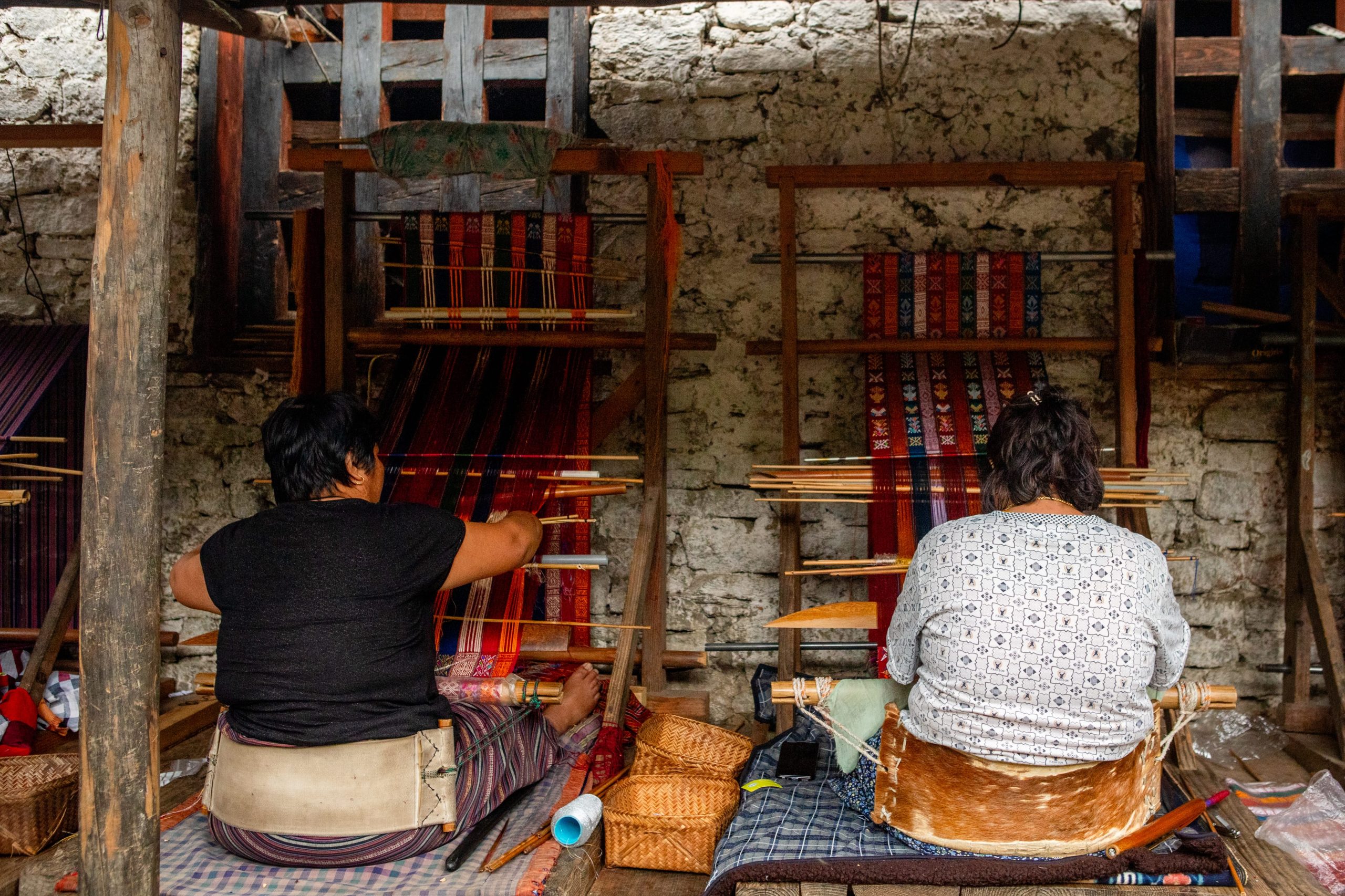
In the remote mountain valleys of Bhutan, a symphony plays out each day—not of music, but of looms. The rhythmic clatter of wooden shuttles, the whisper of silk threads being pulled taut, the gentle conversations between mother and daughter as intricate patterns emerge from seemingly simple materials. This is thagzo, the ancient art of Bhutanese weaving, and it represents far more than the creation of cloth. It is history being woven into the present, spirituality made tangible, and a culture preserving its soul one thread at a time.
For travelers seeking authentic cultural experiences beyond temples and mountain vistas, Bhutan’s textile villages offer something extraordinary: the chance to witness centuries-old traditions in active practice, to meet the women whose hands transform raw fiber into works of art, and to understand how fabric can serve as a language expressing identity, status, devotion, and beauty.
The Sacred Thread: Understanding Bhutanese Textiles
Before we journey to the weaving villages themselves, it’s essential to understand what makes Bhutanese textiles so remarkable and why they’ve captured the attention of textile enthusiasts, museums, and collectors worldwide.
Thagzo: One of the Thirteen Sacred Arts
In Bhutanese culture, weaving holds an elevated position as one of the Zorig Chusum—the Thirteen Traditional Arts and Crafts that are considered essential to Bhutanese cultural identity. These arts encompass everything from painting and sculpture to carpentry and blacksmithing, but thagzo (weaving) stands out as perhaps the most widely practiced and deeply embedded in daily life.
Unlike many traditional crafts that have become rarities, weaving remains vibrantly alive in Bhutan. Nearly every home possesses a loom, and the skill passes from mother to daughter across generations, creating an unbroken chain of knowledge stretching back centuries. This generational transmission ensures that traditional patterns, techniques, and the cultural meanings embedded in textiles continue to flow forward into the present.
More Than Cloth: The Multifaceted Role of Textiles
In Bhutan, textiles serve purposes far beyond covering the body. They function as:
Social Identity Markers: The patterns, colors, and quality of one’s clothing immediately communicate information about region of origin, social status, and occasion. A trained eye can “read” a person’s background and position through their textiles.
Religious Offerings: Textiles are frequently presented as offerings in religious ceremonies, gifted to monasteries, or used to wrap sacred objects. The act of weaving itself can be a form of devotion.
Wealth and Currency: Historically, textiles served as a form of wealth, used to pay taxes to the state and functioning as commodities in trade networks. Even today, finely woven textiles represent significant financial investments and can be family heirlooms passed down through generations.
Ritual Significance: Specific textiles are required for particular ceremonies, festivals, and life transitions. Weddings, promotions, religious festivals, and other important occasions all have associated textile customs.
Artistic Expression: While following traditional patterns, weavers express individual creativity and skill through their choice of colors, the precision of their work, and subtle variations in design execution.
The renowned Queen Mother Sangay Choden Wangchuck recognized the profound importance of Bhutanese textiles when she established the Royal Textile Academy in Thimphu in 2001, elevating weaving from folk craft to national treasure and ensuring its preservation for future generations.
The Weaver’s Canvas: Materials and Dyes
Bhutanese weavers work with a variety of materials, each suited to different purposes and reflecting the resources available in different regions:
Cotton: In temperate and southern areas, cotton forms the basis for everyday garments and utilitarian textiles. Historically, cotton was grown locally, spun by hand, and woven into cloth—much of which was then given to the state as tax payment. Today, while local cotton cultivation has declined, the tradition of cotton weaving continues using imported yarns.
Silk: Both cultivated silk and raw silk (bura) are prized materials for special occasion garments. Eastern Bhutan, particularly districts like Trashigang, is known for raw silk textiles. The lustrous quality of silk makes it ideal for the elaborate garments worn during festivals and ceremonies.
Wool: In central Bhutan, particularly Bumthang, sheep wool is woven into warm textiles including the distinctive yathra blankets with their colorful checkerboard patterns. The wool provides essential warmth in the cold mountain climate.
Yak Hair: In the high-altitude regions where yaks graze, their coarse hair and finer underbelly wool are woven into dense, warm textiles. The Brokpa people of Merak and Sakteng are particularly known for their yak hair weaving.
Nettle Fiber: One of the most traditional and indigenous fibers, stinging nettle was likely the original material used for weaving in Bhutan. Some villages, particularly Nabji and Korphu in central Bhutan, continue to produce textiles from nettle fiber—a practice that requires extensive knowledge of harvesting, processing, and spinning this unusual material.
The colors that bring these textiles to life have traditionally come from natural dyes, though synthetic dyes have become more common in recent decades. Natural dye sources include:
- Madder: Found in forests, providing rich red tones
- Indigo: Cultivated in household gardens, yielding deep blues
- Symplocos leaves: Source of yellow dyes
- Lac: Obtained from eastern Bhutan, producing reds and purples
- Various minerals and plant materials: Creating earth tones and subtle hues
In recent years, there’s been a revival of natural dyeing techniques in villages like Khoma, where environmentally conscious buyers appreciate the rich, lasting colors achieved through traditional methods. Naturally dyed textiles command premium prices in both domestic and international markets.
The Three Pillars of Bhutanese Dress
Before exploring the weaving villages, it helps to understand the three main types of traditional Bhutanese garments that form the foundation of textile production:
The Gho: Men’s National Dress
The gho is the traditional robe-like garment worn by men in Bhutan. It’s a knee-length robe tied at the waist with a belt called a kera, with the excess fabric pouched above the belt forming a kind of pocket. Men wear the gho for all official occasions and in professional settings—it’s required attire for government employees, students, and formal events.
Ghos are typically woven from cotton or wool in striped or checked patterns. While simpler patterns suffice for everyday wear, elaborate ghos with intricate supplementary weft patterns are worn for festivals and special occasions.
The Kira: Women’s National Dress
The kira is a rectangular textile woven in three panels (when made on traditional backstrap looms) or multiple narrow panels (when woven on frame looms). Women wrap the kira around their bodies, securing it at the shoulders with decorative brooches called koma (often made of silver or gold, frequently adorned with turquoise) and at the waist with a belt.
The kira represents the pinnacle of Bhutanese weaving art. The most elaborate kiras, worn during festivals, weddings, and important ceremonies, can take months or even years to complete and may cost thousands of dollars. These masterpieces showcase the full range of Bhutanese weaving techniques and artistic expression.
The Kabney: Ceremonial Scarves
The kabney are ceremonial scarves worn by men over the gho during formal occasions, religious ceremonies, and when visiting dzongs (fortresses) or meeting officials. The color of the kabney indicates rank and status:
- White: Common people
- Red: Ministers and district administrators
- Orange: Members of parliament
- Blue: National Assembly members
- Saffron: King and Je Khenpo (Chief Abbot)
Women wear similar scarves called rachu. These scarves were historically among the first formalized Bhutanese textiles, introduced by Ngawang Namgyal in the 17th century to distinguish men of different ranks.
Regional Textile Traditions: A Diverse Tapestry
One of the most fascinating aspects of Bhutanese textiles is how different regions have developed distinctive styles, techniques, and specialties. This regional diversity reflects both available materials and centuries of isolated development in mountain valleys with limited communication between communities.
Eastern Bhutan: The Weaving Heartland
Eastern Bhutan, particularly the districts of Lhuentse and Trashigang, represents the epicenter of Bhutanese textile excellence. This region produces the most elaborate and valued textiles in the kingdom.
Lhuentse District: The ancestral home of the royal Wangchuck dynasty, Lhuentse has historically been recognized as home to Bhutan’s most celebrated weavers. The Kurto region within Lhuentse is renowned for Kushuthara textiles (also spelled Kishuthara)—among the most expensive and prestigious in Bhutan.
Trashigang District: Known for bura (raw silk) textiles, particularly from Radhi and Bidung villages. Radhi is often called the “Weaving Capital of Bhutan” and specializes in raw silk fabric woven into both ghos and kiras.
Central Bhutan: Wool and Natural Fibers
Bumthang Valley: In the blue pine valleys of Bumthang, women weave yathra fabric—thick woolen textiles in colorful checkerboard or striped patterns. These warm blankets and fabrics are practical for the cold climate while being visually striking. Both traditional backstrap looms and modern horizontal looms are used.
Nabji and Korphu: These villages continue the ancient tradition of weaving with stinging nettle fiber, processing the plants through multiple stages to create workable thread. This specialized knowledge represents some of the oldest weaving practices in Bhutan.
Western Bhutan: Diverse Techniques
Adang Village (Wangduephodrang): Produces textiles including AdangMathra, AdangRachu, and AdangKhamar—textiles with distinctive patterns unique to this region.
Pemagatshel: Known for cotton textiles including Mentsimatha, Aikapur, and Dungsam Kamtham. The number of “cross-hatches” (intersecting supplementary warp threads) in Aikapur textiles indicates their complexity—more cross-hatches mean higher skill and value.
Highland Regions: Yak Hair Textiles
Merak and Sakteng: The Brokpa people of these high-altitude regions weave dense textiles from yak hair and the fine underbelly wool of yaks. These textiles provide essential protection against harsh mountain weather.
Journey to the Weaving Villages
Now let’s take a detailed journey through some of Bhutan’s most significant weaving villages, where you can witness these traditions in living practice and meet the artisans who keep them alive.
Khoma Village, Lhuentse: The Kishuthara Kingdom
Located approximately 10 kilometers from Lhuentse Dzong in northeastern Bhutan, Khoma Village is synonymous with Kishuthara—the pinnacle of Bhutanese weaving art.
What Makes Khoma Special:
Khoma has achieved legendary status among Bhutan’s weaving communities. More than 80% of the women in this village depend on Kishuthara weaving for their livelihood, making it the economic and social backbone of the community. The village’s reputation for excellence stretches back centuries, and Kishuthara kiras from Khoma command the highest prices in Bhutan.
The Art of Kishuthara:
Kishuthara refers to elaborately patterned silk kiras characterized by extremely complex designs woven using the trima technique. Trima (literally “coiling the warp”) is a sophisticated method where weft yarns are entwined around warp yarns, producing raised motifs that appear almost embroidered. The intricacy frequently leads textile experts to mistake Kishuthara for embroidery rather than woven fabric.
The patterns found in Kishuthara textiles draw from nature and spirituality:
- Pigeon’s eyes (jagho mikmang)
- Monkey’s nails (treu sermo)
- Fly’s wings (pacha lokchung)
- Stupas (Buddhist monuments)
- Amulets (gyenhkhor)
- Eternal knots (peldrel)
Each motif carries meaning, referencing religious concepts or natural observations. The designs are generational heirlooms; many weavers themselves don’t know the origins of specific motifs but preserve and recreate them through skill and interpretation passed down through families.
The Weaving Process:
Creating a Kishuthara kira is extraordinarily time-intensive. Depending on the complexity of the design, a single piece can take anywhere from six months to over a year to complete. Weavers work on traditional backstrap looms, a simple apparatus consisting of a strap that goes around the weaver’s back and a series of wooden bars that hold the warp threads taut. Despite the simplicity of the equipment, the results are astonishingly complex.
Girls in Khoma often begin learning to weave as early as eight years old, starting with simple striped patterns before gradually mastering the sophisticated techniques that define Kishuthara. The learning process takes years, with each generation teaching the next.
The Natural Dye Revival:
In recent years, Khoma’s weavers have revived traditional dyeing techniques using natural materials. This eco-friendly approach produces rich, earthy colors that are especially prized by environmentally conscious buyers. Naturally dyed Kishuthara textiles are more expensive than those using synthetic dyes, but the colors are vibrant, long-lasting, and carry the added value of sustainability.
Visiting Khoma:
The village is accessible via a feeder road that diverges from Mongar Town, offering a scenic drive through verdant landscapes. Winter months, when agricultural work slows, are particularly good times to visit, as this is when women dedicate themselves most fully to weaving.
Strolling through Khoma, visitors witness rows of women seated in simple textile sheds, their hands moving with practiced precision as colorful patterns emerge thread by thread. The atmosphere is sociable—women chat as they work, sharing gossip and stories while their fingers maintain the complex rhythms of weaving.
Nearby gewogs (blocks) such as Minjey, Menbi, and Tsenkhar also contribute to Lhuentse’s textile tradition, making the broader region a treasure for textile enthusiasts.
Radhi Village, Trashigang: Raw Silk Capital
Known as the “Weaving Capital of Bhutan,” Radhi Village in Trashigang District specializes in bura—raw silk textiles.
Accessing Radhi:
Travelers can take a domestic flight to Yongphula Airport in Trashigang, followed by a 24-kilometer journey to Radhi. While most of the road is paved, the final stretch remains a rugged farm path, adding adventure to the journey and ensuring that Radhi retains its authenticity.
Raw Silk Traditions:
Raw silk differs from cultivated silk in its texture and appearance—it’s slightly coarser but has a distinctive natural luster and durability. Radhi weavers transform this material into both ghos for men and kiras for women, as well as various other textiles.
The village atmosphere during weaving season is captivating. Homes and dedicated weaving sheds hum with activity as looms clatter and women’s voices blend with the sounds of their work. The textiles produced here are more accessible price-wise than Khoma’s Kishuthara while still representing high-quality traditional craftsmanship.
Community and Economy:
Like Khoma, Radhi’s economy revolves around textile production. The income generated from weaving supports families, sends children to school, and maintains the village infrastructure. When you purchase textiles from Radhi, you’re directly supporting the women artisans and their communities.
Bumthang Valley: Yathra Weavers
The central Bhutanese valleys of Bumthang offer a different textile experience centered on yathra—colorful woolen textiles.
Yathra Characteristics:
Unlike the silk textiles of eastern Bhutan, yathra is practical and warm, designed for Bumthang’s cold climate. The distinctive checkerboard or striped patterns in vibrant colors make yathra immediately recognizable. While simpler in technique than Kishuthara, yathra requires its own specialized skills and aesthetic sensibility.
Where to Experience Yathra:
The Chungphel Community Yathra Committee showcases handmade woolen products, offering visitors a chance to see yathra creation and purchase directly from producers.
The Choekhor Weaving Center provides training to economically disadvantaged women, combining social welfare with cultural preservation. Visiting this center offers insight into how traditional crafts are being used for community development and women’s empowerment.
Both traditional backstrap looms and more modern horizontal frame looms are used in Bumthang, allowing for comparison of techniques and outputs.
The Weaver’s Tools: Looms of Bhutan
Understanding the different types of looms used in Bhutan enhances appreciation for the textiles produced.
The Backstrap Loom (Pang Tha)
The most traditional and widely used loom in Bhutan, the backstrap loom is ingeniously simple yet capable of producing incredibly complex textiles.
How It Works:
The loom consists of a strap that goes around the weaver’s lower back and a series of wooden bars holding the warp threads. By leaning back, the weaver tensions the warp; leaning forward creates slack. This allows for remarkable control and sensitivity. The weaver can feel the tension in her body, making subtle adjustments impossible with a rigid frame loom.
The backstrap loom is portable, can be set up almost anywhere, and requires minimal materials—just bamboo sections and wooden bars. Yet on this simple apparatus, the most complex Bhutanese textiles, including Kishuthara, are created.
The Horizontal Frame Loom (Thrue Tha)
Introduced to Bhutan from Tibet in the 1930s, the horizontal frame loom offers advantages for certain types of weaving.
Innovation and Tradition:
Legend says that Princess Ashi Kencho Wangmo Wangchuck (who later became a Buddhist nun), the youngest sister of the second king, sent a male weaver to Tibet to learn this technology. He succeeded, bringing both the loom and the knowledge of its use back to Bhutan for the first time.
The frame loom allows for weaving wider pieces and can be more efficient for certain textile types. It’s commonly used for yathra production in Bumthang and for textiles that benefit from the greater width it permits.
The Card Loom
Used primarily for weaving belts for both men and women and small straps for traditional footwear, the card loom uses cards (historically made from Bhutanese paper or goat leather, now often using modern materials) to control the warp threads.
While less versatile than backstrap or frame looms, the card loom represents specialized knowledge for belt-making—an essential component of traditional dress.
Understanding Bhutanese Weaving Techniques
The complexity and beauty of Bhutanese textiles derive from sophisticated weaving techniques that weavers master over years of practice.
Warp Pattern Designs
Warp refers to the lengthwise threads on the loom. In warp pattern designs, supplementary warp threads float over the ground fabric to create bands of repeated motifs.
The Significance of Cross-Hatches:
One indicator of a textile’s superiority is the number of “legs” or cross-hatches in each supplementary warp pattern band. More cross-hatches mean greater complexity and skill:
- Mentha: 5 cross-hatches, narrow white bands on black ground—notably the one pattern worn solely by women
- Mentsi Mathra: 7 cross-hatches, alternate yellow warp bands with plain weave red ground
- Aikapur: 11 cross-hatches, representing high complexity
- Some textiles achieve 17 or more cross-hatches, requiring exceptional skill
Weft Pattern Designs
Weft threads run horizontally across the loom. In weft pattern designs, supplementary weft threads create the decorative elements.
Trima (Discontinuous Weft Patterning):
This is the technique that defines Kishuthara. In trima, weft yarns are coiled around warp yarns, creating motifs that rise above the ground cloth. The raised, almost three-dimensional quality of these patterns is what often leads observers to mistake them for embroidery.
Where to Experience and Learn: Museums and Centers
For those unable to visit remote weaving villages or seeking deeper understanding of Bhutanese textile history, several institutions offer exceptional resources.
Royal Textile Academy and National Textile Museum (Thimphu)
Founded by Queen Mother Sangay Choden Wangchuck in 2001, these sister institutions in Bhutan’s capital provide comprehensive overviews of textile traditions.
What You’ll Find:
- Antique Textiles: Historical pieces showing how patterns and techniques have evolved
- Regional Diversity: Textiles from all regions of Bhutan, clearly explained
- Weaver’s Tools: Traditional equipment with explanations of use
- Interactive Exhibits: Demonstrating different weaving styles and techniques
- Educational Programs: The academy offers training programs in traditional weaving, helping ensure knowledge transmission to younger generations
- Sales Gallery: Authentic textiles from certified weavers
The museum’s collection provides context for understanding what you’ll see in weaving villages and helps identify the regional origins and techniques of different textiles.
Gagyel Lhundrup Weaving Centre (Thimphu)
A government-certified outlet where you can purchase authentic Bhutanese textiles with confidence in their provenance and quality. Staff can explain the origins and techniques of different pieces.
Craft Bazaar (Norzin Lam, Thimphu)
Located in Thimphu’s main commercial area, this bazaar showcases textiles and handicrafts from across Bhutan. It’s more accessible than village visits for travelers with limited time.
Textiles at Festivals: Living Culture
To see Bhutanese textiles in their full splendor and social context, attend one of the major festivals.
Thimphu Tshechu (September/October)
Bhutan’s largest festival draws tens of thousands of spectators, all dressed in their finest traditional attire. The variety and quality of textiles on display is breathtaking—from simple cotton kiras to elaborate Kishuthara worth thousands of dollars.
Paro Tshechu (March/April)
Held at Paro’s magnificent dzong, this festival similarly showcases Bhutanese textiles in their ceremonial context. The masked dances and religious performances are enhanced by the visual richness of traditional dress.
Supporting Artisans: Ethical Purchasing
If you wish to purchase Bhutanese textiles, consider these guidelines for ethical and informed buying:
Buy Directly from Weavers:
When visiting weaving villages, purchasing directly ensures your money goes to the artisans rather than middlemen. Weavers are often happy to explain their work and the time invested in each piece.
Use Government-Certified Outlets:
If buying in shops, look for government certification ensuring authenticity and fair pricing.
Understand Value:
A simple cotton textile might cost $50-100. An elaborate Kishuthara kira can cost $2,000-5,000 or more. The price reflects materials, complexity, and time invested. A kira taking a year to complete justifies its high cost when you understand the human investment involved.
Natural vs. Synthetic Dyes:
If environmental concerns matter to you, ask about dyeing methods. Naturally dyed textiles cost more but support sustainable practices and traditional knowledge.
Consider the Impact:
Purchasing textiles supports women’s economic independence, helps families send children to school, maintains traditional skills, and demonstrates global appreciation for Bhutanese culture—encouraging preservation efforts.
Planning Your Textile Journey
If you’re inspired to experience Bhutan’s weaving traditions firsthand, here’s how to plan effectively:
Best Time to Visit:
Winter months (October-March) are ideal for visiting weaving villages, as agricultural work decreases and women spend more time at their looms. However, weaving occurs year-round.
Combine with Festivals:
Timing your visit to coincide with major festivals allows you to see both the creation of textiles and their use in ceremonial contexts.
Arrange Through Tour Operators:
Many Bhutanese tour operators offer specialized textile tours including:
- Visits to weaving villages
- Meetings with master weavers
- Hands-on weaving workshops
- Visits to natural dye gardens
- Guided museum tours with textile experts
- Shopping assistance at certified outlets
Photography:
Always ask permission before photographing weavers. Most are happy to be photographed, but respect is essential.
Conclusion: Threads Connecting Past and Future
In the simple motion of a shuttle passing through warp threads, in the patient concentration of a woman counting cross-hatches, in the vibrant patterns emerging from wooden looms in mountain villages, we witness something profound: a culture maintaining its identity through the work of hands.
Bhutanese textile traditions represent more than aesthetic achievement or technical skill—they embody a philosophy of life where beauty, spirituality, community, and daily labor interweave seamlessly. In a world increasingly dominated by mass production and rapid consumption, Bhutanese weavers offer an alternative vision: one where creation requires patience, where quality matters more than quantity, where the process carries meaning beyond the product.
For the women of Khoma spending a year creating a single kira, for the weavers of Radhi transforming raw silk into lustrous fabric, for the yathra makers of Bumthang warming their communities with colorful wool—weaving is not just livelihood but identity, not just craft but culture, not just tradition but living practice.
When you purchase a Bhutanese textile, you acquire more than beautiful cloth. You take home months of a weaver’s life, centuries of accumulated knowledge, patterns that carry spiritual meaning, and colors derived from mountain plants. You support a family’s income, a daughter’s education, and the continuation of traditions that might otherwise fade.
When you visit a weaving village, sitting beside a loom as patient hands demonstrate ancient techniques, you’re not just observing—you’re participating in cultural preservation. Your interest validates the importance of these traditions, encourages younger generations to value their heritage, and demonstrates that the wider world appreciates Bhutan’s unique contributions to human cultural diversity.
The threads that bind Bhutanese society together are not merely metaphorical. They are literal strands of cotton, silk, wool, and nettle fiber, dyed with plants gathered from hillsides, woven on looms passed through generations, creating textiles that mark life’s passages and bind communities together. These are the threads of Bhutan’s living heritage.
As modernization transforms the kingdom, as young people navigate between traditional and contemporary ways of life, as Bhutan continues its unique experiment in preserving culture while developing economically, textiles remain a tangible link to identity and belonging. In every kira worn to festivals, every gho donned for official duties, every kabney indicating rank and role, Bhutanese people clothe themselves not just in fabric but in history, meaning, and pride.
For travelers, textile enthusiasts, and anyone seeking authentic cultural experiences, Bhutan’s weaving villages offer something increasingly rare: the chance to witness traditions not merely preserved in museums but actively lived, to meet artisans who are masters of their craft, and to understand how material culture can serve as vehicle for values, spirituality, and community.
The looms of Bhutan clatter on, generation after generation, weaving not just cloth but the very fabric of a society that has chosen to measure success not in GDP but in Gross National Happiness, not in speed of development but in preservation of what matters most. In their rhythms, we hear echoes of an older wisdom—one that recognizes beauty as essential, patience as virtue, and tradition as anchor in tumultuous times.
When next you see Bhutanese textiles—in a museum, a market, or wrapped around someone at a festival—look closer. See beyond the vibrant colors and intricate patterns to the hands that created them, the knowledge they embody, the communities they support, and the cultural heritage they preserve. In those threads lies not just Bhutan’s past but also its future, woven one shuttle pass at a time by women whose hands hold centuries of knowledge and whose work ensures that tradition flows forward into tomorrow.
Come to Bhutan. Visit the weaving villages. Meet the artisans. Watch patterns emerge from looms. Feel the texture of raw silk, admire the precision of Kishuthara, warm yourself with yathra. And in doing so, become part of the story—a witness to living culture and a supporter of traditions that connect past to present, thread by precious thread.